Research & Projects
Ongoing Lab Projects
This project expands the services of JustDane’s Healing House, the nation’s only 24/7 medical respite shelter specifically designed for families experiencing homelessness. The initiative enhances Healing House’s existing services by integrating health care education, employment support, and home visits from community health workers to better support the health and stability of parents and their children. The project aims to improve families’ access to medical care, strengthen health outcomes, and promote long-term housing and economic stability. In addition to providing direct services, the initiative will evaluate the impact of family-centered medical respite care to better understand how this model supports families with minor children experiencing homelessness. This collaborative project brings JustDane and a team of researchers from UW–Madison together to assess program outcomes and generate research that can inform future policies and practices supporting unhoused families.
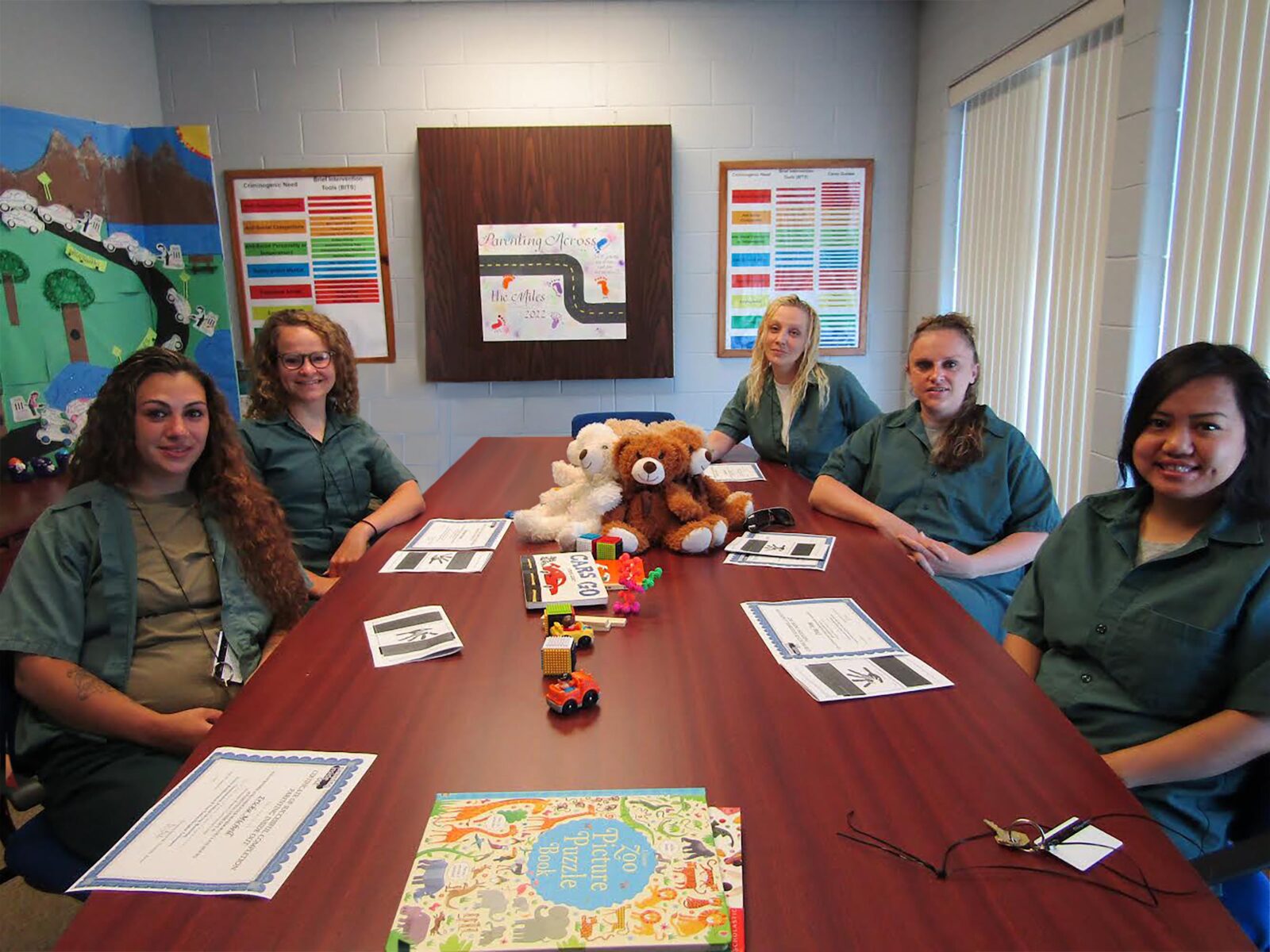
Dane County Jail was selected by the National Institute of Corrections to implement practices that strengthen family support and connections between incarcerated parents and children. Drawing from best practices that show a reduced risk for recidivism and fewer challenges upon reentry when strong family ties exist, our team provided implementation support to introduce parent-focused services and is now conducting evaluation research on parenting classes and child-friendly visits between incarcerated parents and their children.
This project evaluates, refines, and expands services offered within the Washington State Department of Corrections (WADOC) Parenting Sentencing Alternative (PSA) programs, which are designed to reunify or keep incarcerated individuals with their children and family. The goal of the PSA programs is to break intergenerational incarceration, support parents and children, and provide access to services such as mental health and substance use treatment. Evaluation activities include a review of existing programs, an assessment of program effectiveness, and recommendations for improvement. WADOC is partnering with researchers from three universities: Pajarita Charles, PhD and Julie Poehlmann, PhD (University of Wisconsin–Madison), Liliana Lengua, PhD and Amy Pace, PhD (University of Washington) and Yvette Harris, PhD (Miami University).
Led by Dr. Dan Grupe, with Pajarita Charles, Co-Investigator, this project develops and evaluates a trauma-sensitive mindfulness curriculum to support mental health and well-being during the reentry period following incarceration. Skills training in mindfulness and compassion practices can reduce mental health symptoms and foster self-regulation, self-efficacy, and prosocial behavior, which can support successful reentry and interrupt cycles of incarceration that disproportionately affect communities of color. The work is conducted in partnership with the Nehemiah Center, Just Mindfulness, and an advisory board of formerly incarcerated people.
This project systematically maps the existing evidence on alternatives to incarceration for parents and caregivers involved in the criminal legal system, such as deflection, diversion, and alternatives to incarceration. Following PRISMA-ScR guidelines, the review’s protocol is registered with the Open Science Framework and published in BMJ Open. The project is led in collaboration with David McHugh (Information School, UW–Madison), who brings expertise in AI-assisted methods for identifying and synthesizing literature, and Justin Harty (School of Social Work, Arizona State University). By cataloging the range of programs, populations, and outcomes studied to date, the review aims to identify gaps in the evidence base and inform future research and policy focused on keeping families together while reducing reliance on incarceration.
Recently Completed Lab Projects
The purpose of this project is to support incarcerated parents’ engagement with their children through video recorded reading of books. The goal is to increase literacy opportunities for children and maintain parent-child relationships during incarceration. In collaboration with the UW–Madison Division of Extension, our team is conducting an evaluation study with parents in jail and caregivers at home to learn about their perceptions of the program, children’s experience and behavior after watching the videos, and recommendations for program changes. The intent is to use the findings to inform longer-term implementation and replication of the program in Wisconsin jails.
The purpose of this project was to support the successful implementation of parenting education services in Wisconsin prisons with the aim of reducing the negative impact of incarceration on mothers, fathers, and their children. With support from the 4W Initiative and the Wisconsin Child Abuse and Neglect Prevention Board, our team collaborated with the WI Department of Corrections to implement Parenting Inside Out in four prisons with mothers and fathers and to connect caregivers to resources in the community that promote child health and wellbeing. We also conducted an evaluation study to learn more about how the program was working and parents’ experiences.
The purpose of this study is to document the challenges that people incarcerated in prisons and jails, as well as in reentry, experience during the COVID-19 pandemic. The goal of the project is to learn more about how the virus has affected people’s day-to-day experiences including exposure, physical symptoms, concerns about health, and the impact COVID-19 has had on loved ones and changes to daily life. The intent is to use the research to inform local, state, national, and global criminal justice response efforts to combat the virus.
This feasibility study has developed an innovative multidisciplinary approach to bring about transformative change in the lives of incarcerated mothers and fathers, at-home caregivers, and children through enhanced visits in jail settings. This multi-level intervention strategy improves family visits between children and their incarcerated parent by fostering positive family interactions through video chat and coaching during jail and home visits.
A feasibility study funded by the National Institute of Child Health and Human Development setting out to design, implement, and evaluate a family-focused community-based reentry service for fathers recently released from jail and prison. This study seeks to improve parent and child outcomes through father engagement, high-quality parenting and relationship skills, and extended family involvement.
Started by researchers at the University of Notre Dame, the Lab for Economic Opportunities (LEO) aims to end cycles of poverty by helping service providers apply rigorous scientific evaluation methods to better understand and share effective poverty-reducing interventions. In this LEO randomized controlled trial focused on Missouri reentry services after prison, our goal was to understand the effectiveness of The Fathers and Families Support Center’s (FFSC) program in reducing recidivism rates of formerly incarcerated fathers and promoting economic wellbeing through employment and earnings.